Robyn: Tickets for Events
The most important information about Robyn
Robyn tickets attract listeners drawn to pop music that balances heartbreak with euphoria, often in the very same verse.
Robyn tickets attract listeners drawn to pop music that balances heartbreak with euphoria, often in the very same verse. Born Robin Miriam Carlsson, the Swedish artist has spent decades building a body of work that feels both intensely personal and universally danceable, and anyone searching out her live dates is really searching for that rare mixture of catharsis and release.
Robyn – musical style
Robyn's sound sits at the meeting point of synthpop, dance-pop and R&B, a combination that has let her slip between moods without ever losing a sense of identity. Her songs often carry the architecture of club music — pulsing synths, insistent beats, melodies built to move bodies — while the lyrics underneath do something quieter and more complicated. There's a particular alchemy in her writing where joy and sorrow don't cancel each other out; they coexist, each sharpening the other.
As a vocalist, pianist and keyboardist, Robyn has never been a performer who simply fronts a track. Her fingerprints are audible in the structure of the music itself, in the way a synth line might mirror a vocal phrase or a chord progression might bend a seemingly straightforward pop hook into something more unsettled. That instrumental fluency gives her records a sense of authorship that goes beyond the voice alone, and it's part of why her work has aged so distinctively within pop.
There's also a restraint to her production choices that sets her apart from much of contemporary dance-pop. Rather than overwhelming a track with layers, she tends to let space do the emotional work — a held note, a pause before the drop, a lyric left unresolved. This is music that trusts its listener to sit with ambiguity, to dance through confusion rather than around it. It's an approach that rewards repeated listening, revealing new textures and emotional shadings with each return.
Her R&B influences surface in phrasing and in the intimacy of her vocal delivery, even when the surrounding production is at its most synthetic and electronic. That tension between the organic and the machined is, in many ways, the throughline of her catalogue: a human voice navigating a constructed, glittering soundscape, never quite losing itself in the artifice. It's a quality that has made her music feel emotionally legible even at its most stylised.
Taken together, these elements have made Robyn a reference point for a particular strand of pop songwriting — one where vulnerability and physicality are treated as compatible, even essential to one another. Her influence can be heard in artists who followed, but her own records retain a specificity that resists easy imitation.
Key career highlights
Robyn's career stretches back to 1994, giving her an unusually long vantage point on pop music's many shifts in fashion and technology. Few artists working in dance-pop today can claim a timeline that spans so many eras of production style, distribution and listening habit, and that longevity has shaped the way she approaches her own catalogue — less as a series of disconnected eras, and more as a continuous, evolving conversation with her audience.
She first achieved worldwide recognition during the late 1990s, a period when her music reached audiences well beyond Sweden and established her as an artist capable of crossing borders without diluting what made her distinctive. That early international visibility set the foundation for a career built on reinvention rather than repetition, and it's notable how consistently she has returned to creative control even as the music industry around her has changed shape repeatedly.
Over the years, her recordings have been released through a range of labels, including BMG, RCA, Jive, Konichiwa and Interscope — a list that reflects both the major-label machinery of her early years and the more independent, self-directed path she carved out later through Konichiwa, the label closely associated with her own artistic vision. That shift, from major-label system to a more self-determined structure, mirrors a broader story about artists reclaiming authorship of their own careers, and Robyn's trajectory is often cited as an early example of that movement within pop.
Her standing within the industry has been recognised formally too, with four Grammy Award nominations across her career — an indication of the regard in which her songwriting and production have been held by peers and critics alike, even as her work has often sat slightly outside the commercial mainstream.
A few points mark out the shape of that journey clearly:
- Decades of continuous output, active as a recording artist since 1994
- Early global breakthrough during the late 1990s
- Four Grammy Award nominations, recognising both songwriting and production
- A label history spanning BMG, RCA, Jive, Konichiwa and Interscope, reflecting a shift towards creative independence
Robyn – live shows
There is a particular charge to encountering Robyn's music in a live setting, one that recorded versions can only hint at. The push-pull between melancholy and elation that defines so much of her songwriting tends to intensify on stage, where a room full of people dancing to a lyric about loss creates its own strange, powerful atmosphere. It's the kind of show where you might find yourself crying and moving your feet in the same chorus, and that duality is part of what makes the experience memorable rather than simply enjoyable.
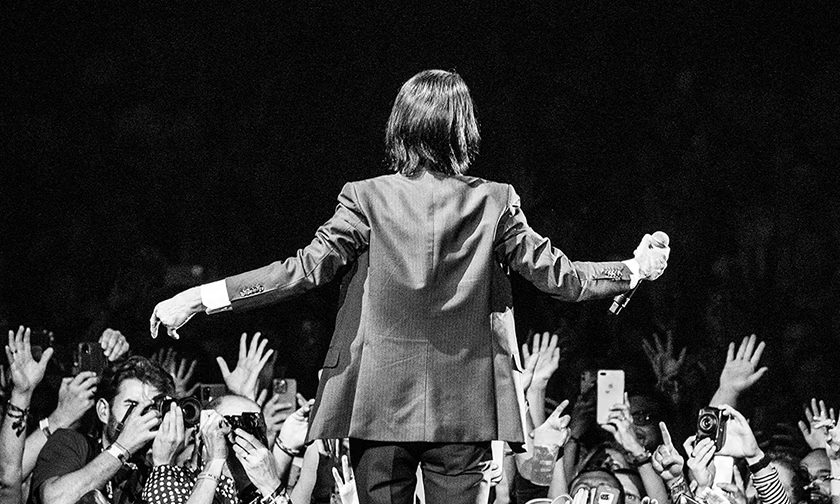
Her appearance at Primavera Sound Festival in June 2019 is one documented point in a career full of festival and live performances, a reminder that her music translates readily to large outdoor stages as well as more intimate club environments. Dance-pop built around synths and strong vocal hooks tends to thrive in those big, open-air settings, where the music can expand to fill the space between performer and crowd.
What you can reasonably expect from a Robyn performance is a set built on momentum — songs that build and release, moments of quiet giving way to surges of energy, and a crowd that responds physically as much as emotionally. Her background as a keyboardist and pianist often surfaces in live arrangements too, lending a sense of musicianship to performances that could otherwise lean purely on spectacle.
For many fans, seeing her live isn't just about hearing familiar songs performed well; it's about experiencing that particular emotional register — joy shot through with ache — in a shared, physical space. That communal aspect of her shows, the sense of a room collectively holding two feelings at once, is often what people remember longest.
Tickets for Robyn on FanTix
When you're ready to arrange your visit to see Robyn perform, FanTix is built to make that process as straightforward as possible. The purchase journey has been kept simple from start to finish, so you can move from browsing to booking without unnecessary friction or confusion along the way.
Every transaction runs through secure checkout, giving you confidence that your payment and personal details are handled properly throughout. Once your purchase is complete, your tickets are stored directly in your FanTix account, meaning there's no need to keep track of separate emails, downloads or printouts — everything you need sits in one place, ready when you are.
For those travelling to see a performance, FanTix also offers the option to arrange accommodation on the same platform, allowing you to organise travel and tickets together rather than juggling multiple bookings across different sites. It's a practical convenience designed for fans who want the logistics of a night out to feel as considered as the performance itself.
Whether you're a long-time follower of Robyn's work or coming to her music more recently, FanTix aims to make the practical side of attending a show simple, secure and entirely in your hands.