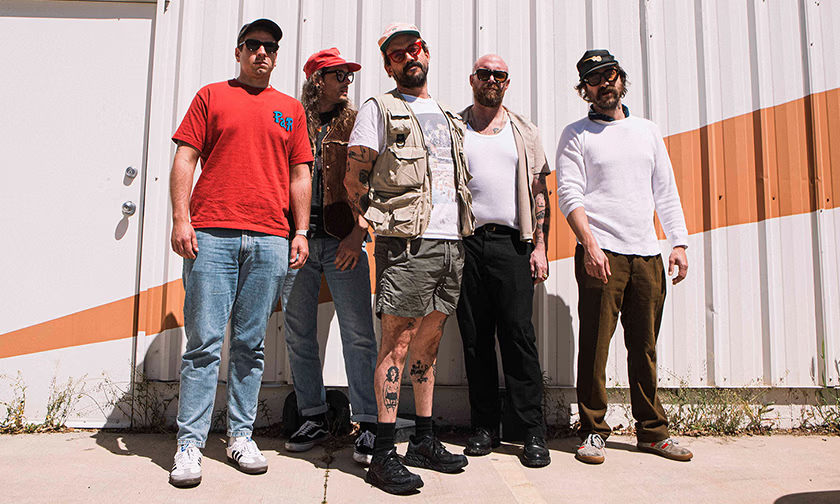
Jacob Banks: Tickets for Events
The most important information about Jacob Banks
Anyone looking for Jacob Banks tickets is drawn by a voice that feels lived-in and weathered, a baritone instrument capable of shifting from a whisper to a roar within a single phrase.
Anyone looking for Jacob Banks tickets is drawn by a voice that feels lived-in and weathered, a baritone instrument capable of shifting from a whisper to a roar within a single phrase. Born in Nigeria and raised in Birmingham from the age of thirteen, Banks carries two cultures in his music, blending them into something that feels both rooted and restless.
Jacob Banks – musical style
There is a gravity to Jacob Banks' sound that sets him apart from his contemporaries. His voice sits low and textured, carrying the weight of soul tradition while refusing to be bound by it. Listeners often describe the sensation of being pulled into a room with him rather than simply hearing a record play, and that intimacy is no accident. It comes from a disposition that favours feeling over flourish, letting a single held note communicate more than a dozen vocal runs ever could.
The production that surrounds that voice is where the African-inspired grooves meet something more electronic and contemporary. Richly textured beats, built from 808s and synth play, give his songs a modern low end while the melodic sensibility above them stays warm and unmistakably soulful. It is a combination that refuses easy categorisation: not quite R&B, not quite gospel-soul, not quite the bass-driven world of UK urban music, but something that borrows confidently from each.
What makes this blend compelling is the way it mirrors Banks' own story. He did not come to music through years of formal training or a childhood steeped in performance; by his own account, he began singing, playing guitar, and writing songs only once he reached adulthood. That late arrival seems to have sharpened rather than delayed his instincts. His songwriting carries the urgency of someone who found his voice and immediately had something to say with it, rather than the polish of a craft honed since childhood.
Thematically, his work tends to dwell in the emotional terrain of longing, resilience, and self-examination. There is little interest in surface-level romance here; instead, the songs often read like private confessions turned outward, holding space for vulnerability without ever slipping into self-pity. Grief, faith, heartbreak and perseverance surface again and again, treated with a plainness that makes them land harder.
Above all, Banks' style rewards patience. These are not songs built for instant gratification but for repeated listening, where a lyric half-missed on first pass reveals itself fully on the fifth. It is music that assumes an attentive listener, and in return, it offers something rare: a sense of being truly spoken to rather than performed at.
Key career highlights
Banks' public journey as a recording artist began in earnest in 2013, when he self-released his debut EP, The Monologue. For an artist who had only recently picked up a guitar and started writing, the project announced a songwriter already comfortable inhabiting difficult emotional territory, unwilling to smooth over the rough edges of his own story for the sake of easy listening.
That early independence mattered. Releasing his own work rather than waiting for industry validation meant Banks' sound developed on his own terms from the outset, free from the pressure to chase a particular trend. The grooves, the 808s, the soul phrasing — all of it took shape before wider audiences had a chance to weigh in, giving his catalogue a sense of internal consistency that has carried through his career.
Recognition followed in the form of high-profile support slots, a route many of Britain's most distinctive vocalists have travelled before finding their own headline audiences. Banks shared stages across the UK with artists spanning different corners of contemporary soul and pop, each pairing exposing his music to listeners who may not have encountered it otherwise.
- Supported Alicia Keys on UK tour dates, placing his voice alongside one of soul-pop's most established names
- Supported Sam Smith, connecting with an audience drawn to vulnerable, vocally driven songwriting
- Supported Emeli Sandé, reinforcing his place within a lineage of British soul artists rooted in emotional honesty
These supporting roles were not incidental. Each pairing reflects something of what makes Banks' own work distinctive: the willingness to foreground emotional transparency over spectacle. Standing alongside such established names night after night, in rooms built for someone else's audience, is its own kind of trial by fire, and it is one that appears to have sharpened rather than diminished his stage presence.
Taken together, these milestones trace the arc of an artist who built his foundation independently before being absorbed into bigger stages and wider conversations, never losing the specific, soulful character that made his early work distinctive in the first place.
Jacob Banks – live shows
There is a particular charge that comes from hearing a voice like this filling a room rather than coming through speakers at home. Recorded soul music can feel intimate, but it is in the live setting that the full physical presence of a baritone like Banks' tends to register most powerfully, with low notes that seem to move through the floor as much as the air.
Audiences who have encountered this kind of performance often describe a shift partway through a set, a moment where the room stops feeling like a venue and starts feeling like a shared emotional space. Soul music, at its best, closes the distance between performer and listener, and the blend of African rhythm and British soul phrasing that defines this catalogue seems built precisely for that kind of connection.
There is also an unpredictability to live soul performance that studio recordings cannot capture. A note held slightly longer than expected, a lyric delivered with new emphasis, a band locking into a groove that takes on its own life in the room — these are the textures that reward the listener who chooses to experience the music live rather than only through recordings.
For anyone drawn to music that values emotional honesty over spectacle, a live setting offers the clearest possible view of what that honesty actually sounds like, unfiltered and immediate, carried by a voice built for exactly this kind of encounter.
Tickets for Jacob Banks on FanTix
Securing tickets for Jacob Banks through FanTix is designed to be straightforward from start to finish. The purchase journey has been kept simple and clear, meaning there is no need to navigate unnecessary steps between finding a listing and confirming a booking.
Every transaction runs through a secure checkout, giving buyers confidence that their payment details and personal information are handled with appropriate care throughout the process. Once a purchase is complete, tickets are stored directly within the customer's account, removing the worry of lost emails or misplaced confirmations and making them easy to access whenever needed.
For those travelling to see a performance, FanTix also offers the option to arrange accommodation on the same platform. This means the practical side of attending a show, not just the ticket itself, can be managed in one place, saving the hassle of juggling multiple bookings across different sites.
Altogether, the platform's approach reflects a straightforward principle: make the logistics simple so that the focus can remain where it belongs, on the music and the experience of hearing it performed live.