Foals: Tickets for Events
The most important information about Foals
Foals have spent close to two decades turning restless energy into some of British guitar music's most distinctive moments, and anyone looking into Foals tickets is tapping into a live legacy built on that same unpredictable intensity.
Foals have spent close to two decades turning restless energy into some of British guitar music's most distinctive moments, and anyone looking into Foals tickets is tapping into a live legacy built on that same unpredictable intensity. Formed in Oxford, England, the band fused math-rock precision with dancefloor instinct from the outset, and that tension between discipline and abandon remains the engine of everything they do.
Foals – musical style
There is a particular thrill in hearing a band that refuses to sit still, and Foals have rarely done so. Their music draws from an unusually wide well: the metronomic pulse of techno, the hypnotic repetition of krautrock, and the jagged edges of post-punk all feed into a sound that never settles into easy categorisation. It's a combination that could easily feel academic in lesser hands, but Foals have always made it feel physical, almost compulsive, as though the ideas are being worked out in real time rather than planned in advance.
That character was audible from the very beginning. Their debut set out a template built on math-rock guitar pyrotechnics, interlocking and angular, layered against percussive gymnastics that gave the songs a nervy, propulsive quality. Into that mix came Afro-pop horns, bright and unexpected, lending warmth to music that could otherwise have felt purely cerebral. The result was a band that sounded like art-school theorists who'd accidentally discovered how to make people dance.
As the years progressed, that initial spikiness gave way to something starker and more delicate, a melancholy strain that ran through their middle period without ever losing the rhythmic urgency underneath. Guitars that once chattered and ricocheted began to breathe more, to leave space, to let atmosphere do some of the work previously handled by sheer technical density. It's the sound of a band growing more comfortable with restraint, learning that tension doesn't always need to be resolved through volume.
Later records pushed further still, embracing heavier textures and widescreen production without abandoning the interlocking guitar lines that remain the band's signature. Across all of these shifts, vocals have carried a plaintive, searching quality, often sitting somewhere between vulnerability and defiance. It gives the songs an emotional throughline even as the instrumental palette keeps expanding outward.
What ties it all together is a sense of risk. Foals have never been a band content to repeat a winning formula, and that restlessness is precisely what makes their catalogue feel alive rather than static. Listening to them in sequence is like watching a group continually interrogate its own instincts, refusing comfort in favour of movement.
Key career highlights
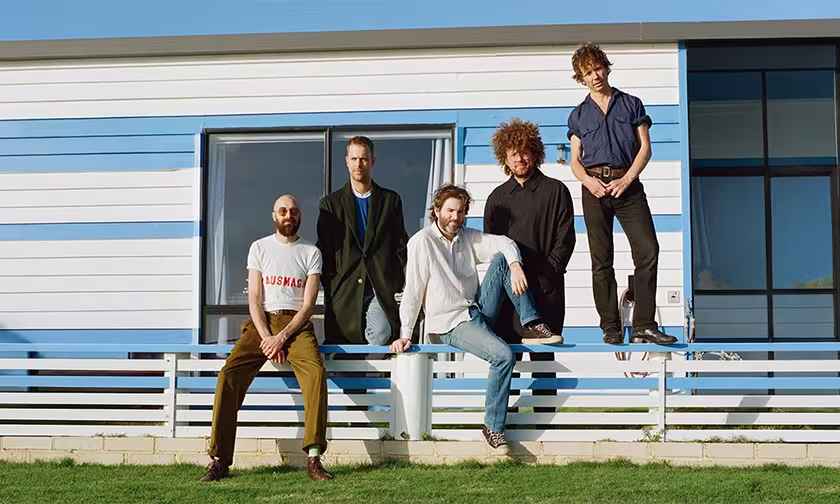
Foals' story began to take shape when Yannis Philippakis and Edwin Congreave came together over a shared appetite for techno, krautrock and post-punk, later completing the line-up with Jack Bevan on drums, Andrew Mears on vocals, guitarist Jimmy Smith and bassist Walter Gervers. That foundation of varied, sometimes unlikely influences gave the band an identity distinct from their indie-rock peers almost from day one.
Their debut album arrived in 2008 to considerable acclaim, climbing to number three in the UK charts and establishing them as a genuinely exciting new voice in British guitar music. The single "Cassius" was singled out by Rolling Stone as one of the year's finest tracks, a marker of how quickly the band's inventive, angular sound had travelled beyond the UK's shores. It set a pattern that would recur throughout their career: critical recognition following close behind creative ambition.
The follow-up record pushed the band towards a starker, more contemplative sound, earning a Mercury Music Prize nomination and reaching number eight in the UK Albums Chart. That critical esteem continued with their third album in 2013, which also received a Mercury Prize nomination and was supported by a notable television appearance that introduced the band to new audiences. The following year's standout single was recognised by NME as Best Track, reinforcing a reputation for songwriting that could be both muscular and genuinely affecting.
By the mid-2010s, Foals had become a fixture of the British music conversation, earning a BRIT Award nomination for British Group in 2016 following the release of their fourth album. Their trajectory eventually reached a career milestone with their first UK number one album, a significant marker of how far the band's ambition and audience had grown since those early, spiky beginnings. In 2022, they returned with their seventh studio album, crafted with a varied group of producers and signalling yet another chapter in a catalogue defined by reinvention.
A few of the clearest markers of that journey include:
- A UK number three debut album in 2008, followed swiftly by international critical recognition
- Consecutive Mercury Prize nominations across their second and third albums
- A BRIT Award nomination for British Group in 2016
- Their first UK number one album, a defining commercial milestone
Foals – live shows
There's a particular kind of anticipation that builds around a Foals performance, rooted in the knowledge that the songs themselves were built for physical release. Studio recordings hint at the tension, but it's in a live setting that the interplay between taut rhythm and sudden eruption tends to find its fullest expression. The interlocking guitar parts that define so much of their recorded work take on a different character when performed in real time, with small variations and extended passages giving familiar songs new shapes.
Audiences drawn to this band tend to arrive expecting intensity, and the architecture of the songs supports that expectation. Quiet, searching passages can tip without warning into something far more forceful, and that unpredictability is part of what keeps a crowd engaged from the first note. There's a communal physicality to the experience, a sense of a room moving together through passages of restraint and release.
Because the catalogue spans such different sonic phases, a live set can move fluidly between the wiry urgency of earlier material and the heavier, more expansive textures of later work. That range gives each performance its own internal narrative, built from contrast rather than consistency, and it rewards listeners who know the records well enough to anticipate the shifts.
Ultimately, what makes this band compelling in a live setting is the same quality that defines their recordings: a refusal to settle. Watching that restlessness play out among a crowd, in real time, is where the music arguably makes the most sense.
Tickets for Foals on FanTix
Booking tickets for a band with this kind of layered, evolving catalogue should feel as considered as the music itself, and that's the experience FanTix aims to provide. The purchase journey has been kept deliberately simple, allowing you to move from browsing to booking without unnecessary friction or confusing steps along the way.
Security sits at the centre of that process. Every transaction runs through a secure checkout, giving you confidence that your details and your purchase are handled properly from start to finish. Once booked, tickets are stored directly within your FanTix account, meaning there's no need to hunt through emails or keep track of separate confirmations; everything you need remains in one accessible place.
For those planning a trip around a performance, FanTix also offers the option to arrange accommodation on the same platform. It's a practical addition for anyone travelling to see a band whose live reputation draws audiences from well beyond their immediate surroundings, bringing travel and ticketing together under a single, straightforward booking experience.